


SERVICES
-
Individual Therapy
Psychotherapy provides a safe space to explore what bothers you in the atmosphere of trust and respect. There are times in life when we simply need support in dealing with our circumstances and emotions. Therapy is effective in treatment of many psychological difficulties. We work with individuals and couples, and we utilise evidence based approaches. Amongst the many issues which clients bring to us are the following:
Depression – Anxiety – Stress – Panic attacks – Obsessive compulsive disorder – Grief - Relationship crisis - Trust & infidelity issues - Communication difficulties - Sexual difficulties - Significant conflict
-
Couples therapy
Relationships are dynamic, as people are dynamic. We constantly evolve and grow. Each person has a unique history, personality characteristics, and perception of reality. Relationship between two people is therefore a dynamic process within which two individuals constantly evolve and grow individually, while at the same time trying to grow and evolve together as a couple. At times these processes do not align and partners might find themselves growing apart instead. We can help with:
Relationship crisis - Infidelity issues - Communication difficulties - Adjustment problems- Sexual difficulties - Significant conflict
-
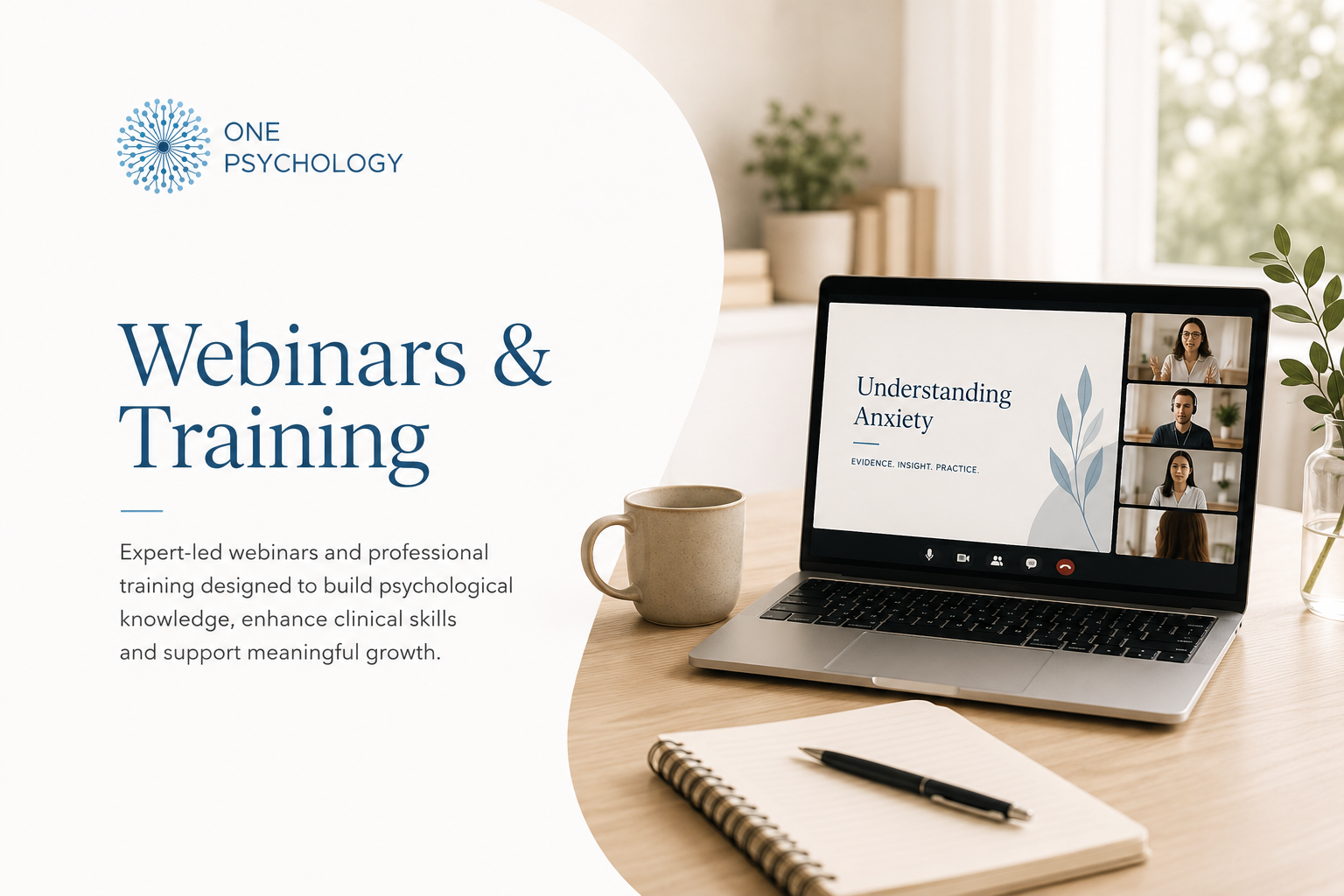
Webinars ad training
We offer customised training sessions and workshops to individuals, professionals and groups. Our psychological seminars and workshops will give you an in-depth knowledge and practical skills condensed in 2h sessions. Our courses are delivered live by qualified psychologists with an interactive time, allowing you to ask questions and to practice tangible skills. Most our services are offered online, however some workshops can be facilitated in person if necessary.
We can help with: Burnout Prevention & Recovery - Improving Resilience - Conflict Resolution - Mastering Communication - Effective Learning, Problem-solving
-
Anxiety Therapy
DescrAnxiety is one of the most common reasons people seek psychological therapy. While feeling anxious is a normal part of being human, anxiety can become overwhelming when it begins to interfere with daily life. You may find yourself worrying constantly, avoiding situations that once felt manageable, experiencing panic attacks, or noticing physical symptoms such as a racing heart, muscle tension or disturbed sleep. Over time, anxiety can start to affect work, relationships, confidence and overall quality of life.
General Anxiety - Social Anxiety - Phobias - Agoraphobia - Health Anxiety
-
Depression Therapy
Depression is one of the most common reasons people seek therapy, yet it often convinces people that nothing can help. It can affect mood, motivation, concentration, sleep, appetite, confidence, and relationships. Many people describe feeling emotionally numb, exhausted, or as though they are simply "going through the motions" rather than truly living. Therapy provides a safe and compassionate space to understand these experiences, make sense of what may have contributed to them, and gradually begin rebuilding a life that feels meaningful again.
Depression - Low Mood - Anhedonia - Low Energy - Low Motivation
-
OCD Therapy
Obsessive-Compulsive Disorder (OCD) is much more than simply liking things to be neat or organised. It is a distressing condition in which a person experiences unwanted, intrusive thoughts, images or urges (known as obsessions) that create significant anxiety or discomfort. In an attempt to reduce this distress, they may engage in repetitive behaviours or mental rituals (known as compulsions). While these behaviours often provide temporary relief, they inadvertently strengthen the cycle of OCD, making the obsessions return more frequently and with greater intensity over time.